Tag Archives: dryvit

Dryvit Parent RPM International Buys German EIFS Manufacturer FEMA GmbH

RPM International – who owns Dryvit Systems – has acquired another EIFS manufacturer based out of Germany. While the news doesn’t affect Canada per-se, but does demonstrate that EIFS have a bright future going forward and that major players are willing to invest big money into the future of the industry.

MEDINA, Ohio, Dec. 1, 2011 /PRNewswire/ – RPM International Inc. (NYSE: RPM) announced today that its RPM Building Solutions Group (RPM BSG) has signed an agreement to acquire FEMA Farben + Putze GmbH (FEMA GmbH) of Ettlingen, Germany.  FEMA GmbH, with annual sales of more than USD $40 million, is a leading manufacturer and supplier of External Insulating and Finishing Systems (EIFS) and complementary product lines to the German and French construction markets. Terms of the transaction, which is expected to be accretive to earnings within one year, were not disclosed.

“The addition of FEMA’s EIFS product line immediately enhances our capabilities to address the market for energy efficient and sustainable high-performance buildings in Germany, the current number one marketplace for EIFS in the world, and France, one of the fastest growing markets for EIFS.  It also provides a platform to extend FEMA’s product systems through existing RPM subsidiary companies into other European countries,” stated Frank C. Sullivan, RPM chairman and chief executive officer.

“FEMA’s energy efficient cladding complements our Tremco illbruck building sealing technologies, allowing us to serve a larger portion of the market for energy efficient buildings,” stated Reiner Eisenhut, president and managing director of RPM BSG Europe.

FEMA GmbH will operate as a stand-alone business within RPM BSG Europe in conjunction with Tremco illbruck and the FEMA GmbH existing management team, which was developed by Heinz Fedder, founder and CEO, who will continue with the company in a consulting capacity.

About RPM
RPM International Inc., a holding company, owns subsidiaries that are world leaders in specialty coatings, sealants, building materials and related services serving both industrial and consumer markets.  RPM’s industrial products include roofing systems, sealants, corrosion control coatings, flooring coatings and specialty chemicals.  Industrial brands include Stonhard, Tremco, illbruck, Carboline, Euco, Flowcrete and Universal Sealants.  RPM’s consumer products are used by professionals and do-it-yourselfers for home maintenance and improvement and by hobbyists.  Consumer brands include Zinsser, Rust-Oleum, DAP, Varathane and Testors.  Additional details are available atwww.rpminc.com.

For more information, contact Robert L. Matejka, senior vice president and chief financial officer, at 330-273-5090 or rmatejka@rpminc.com.

Dryvit: What is Stucco/EIFS


Transcript:
We all want to make our environment cleaner, and healthier. There is an extraordinary exterior wall system that has a tiny environmental foot print, with a huge economic benefit. Outsulation system from Dryvit – as green as it gets.

Outsulation systems are highly energy efficient wall claddings, used on 350,000 buildings worldwide. Outsulation systems can be attached to an approved substrate, or installed over an air and water barrier, as shown here. Components include expanded polystyrene (EPS) insulation board, fiberglass reinforced base coat, and a textured acrylic finish. A variety of finished textures, styles and colors are available, and can replicate stucco, brick, limestone or granite. The expanded polystyrene can be shaped to create architectural details such as reveals, cornice work and quoins. the design options with Dryvit outsulation systems are virtually endless.

Most importantly, Dryvit Outsulation systems are simply – as green as it gets. Let’s see how.

3 key factors impact the construction and use of buildings. These are the design and construction cost, operating cost, and environmental cost. Each cost has not always been equally important to all involved in the building’s life span. For example – the architect and general contractor are typically most concerned with aesthetics, function and meeting a construction budget. Similarly, a facility manager often has to operate and maintain a structure in which he had no role in designing. And, there have been few in any capacity – until recently, who were concerned with the environmental footprint of their building, beyond conforming to local building codes. Today, concern for all costs and more and more of the environmental one, is equally compelling to all involved in the construction cycle and building use.

Let’s examine these costs, beginning with construction. The selection of exterior cladding materials is usually dictated by the desired appearance. Once bidding takes place however, a building is often over-budget and the value-engineering phase begins. This process can result in changing the aesthetics and as a consequence, sacrifices quality and performance. But not with Dryvit Outsulation systems. In a case study by a major architectural firm, over 10% – $570,000 of shell construction costs were saved on a building designed for masonry, by substituting the Dryvit Outsulation system. The exact look of the project was maintained, and 2 months were slashed from the construction schedule! Imagine what the building owner could do with that extra “green”!

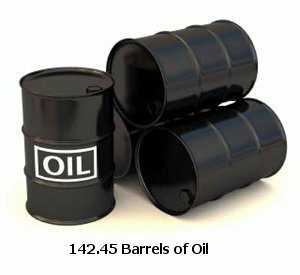
Next, let’s look at the operating cost. Specifically – the HVAC and maintenance cost for the lifetime of the building. 40% of all energy consumed goes for heating and cooling of buildings of all types. And energy prices have tripled in the past few years. Much research has been dedicated to the goal of reducing energy use, for instance – the Canadian Mortgage and Housing Corporation (CMHC) determined that insulation placed on the exterior of the wall in steel frame construction reduces both air leakage and thermal bridging. This in turn, greatly improves energy efficiency. Dryvit Outsulation systems do just that. By literally placing a seamless thermal blanket on the outside of your building and helping to reduce energy consumption. The state of Massachusetts endorses this concept, by requiring exterior insulation for all metal framed structures in the state building code, and other states are considering similar legislation. At Dryvit’s request, the U.S. Department of Energy’s Oak Ridges National Laboratory conducted whole-wall experiments in order to compare the energy efficiency of several commonly used claddings. The 2″ thick Dryvit Outsulation systems were found to be at least 84% more energy efficient than the next best one. What does 84% more energy efficient mean? Simply that Dryvit Outsulation systems can reduce a building’s energy use by 30% with no additional cost. In fact in 2006, by dramatically increasing the energy efficiency of over 350,000 buildings, Dryvit Outsulation systems saved the equivalent of over 3,500,000 barrels of oil.

It’s clear, Dryvit Outsulation systems can save money on both construction and operating costs for the building’s life-time. But in today’s more socially conscious economy, that just isn’t green enough.
Because of the theorized link of carbon dioxide emissions to rapid climate change, special focus has been placed on establishing the “carbon footprint” of all things, large and small. Building products need to be evaluated in terms of their impact on the environment over their entire lifetime and not just at a single point. For this reason, Dryvit asked the national institute of standards and technology to evaluate the environmental impact of Outsulation systems throughout these 5 life-cycle stages. this chart shows the resources needed to extract and create the materials we use to make our Outsulation systems, including the expanded polystyrene. It also takes into account our manufacturing process. As you can see, the energy required is significantly less than for some other common claddings. In fact, while we’re on the topic of manufacturing, Dryvit’s facilities are managed to ISO standards which require constant measurement and improvement. ISO is the benchmark for world-wide manufacturing excellence.

Transportation comes next. When comparable square foot quantities of various claddings are transported equal distances, Dryvit outsulation systems compare very favourably with brick and stucco.

After construction and use – which we’ve already discussed, comes the end life of a product, which involves reuse, recycling or disposal of a product. Again, Outsulation systems are superior. The Dryvit-Care program perscribes the routine and affordable measures that can be taken to keep Outsulation systems looking beautiful. When properly cared for, Outsulation systems can perform as intended for the life-time of the building. Dryvit outsulation systems are also used to renovate other materials – such as brick and stucco without changing the look, and without having to remove and dispose of the original cladding. It is tempting to think that because Dryvit Outsulation systems incorporate expanded polystyrene and acrylic polymers, that somehow this makes them less ecologically responsible than the seemingly more natural product such as wood siding, or clay brick. It is essential however, that when evaluating a product’s environmental impact, the entire life cycle be considered. Whether a product is natural or manufactured, there are embedded energy costs involved with each phase. No single phase is more important than another. The size of every product’s environmental footprint is determined by the total impact over the entire life cycle.

Reduction of carbon dioxide emissions is a world-wide environmental goal. This study shows that over the the 50-year life cycle of the building, the carbon footprint of Dryvit outsulation systems is about 3 times smaller than stucco, and 5 times smaller than brick.

Green buildings reduce carbon dioxide emissions by using fewer resources throughout their life cycle. Today, everyone involved in the business of designing, constructing and operating buildings has an opportunity to positively affect the world by making smart choices. So choose Dryvit Outsulation systems – products with a tiny environmental footprint, but huge economic and ecological benefits. That’s why we can claim – we’re as green as it gets.

Rhode Island Dryvit Make over Winner Selling Home

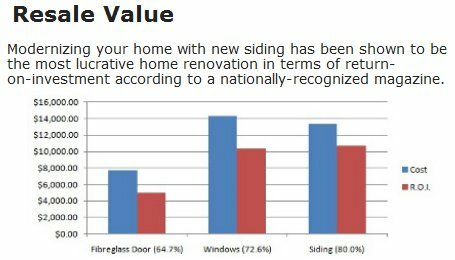
This summer – a contest was put on in Rhode Island in which the grand prize was a home make over using Dryvit’s Outsulation System. The lucky home owner was thrilled (who wouldn’t be, when you just increased the value of your home by $70,000).

You can view the follow up here:

http://www.foxprovidence.com/dpp/rhode_show/dryvit-systems-remodels-viewers-home

And if you really want to, you can buy the home here:

http://www.chrisslocum.com/area/5-mill-wheel-rd-warwick-rhode-island-02886/?utm_source=rss&utm_medium=rss&utm_campaign=rss

Dryvit Systems remodels viewer home

Home makeover winner’s house revealed

Updated: Friday, 11 Dec 2009, 10:30 AM EST
Published : Friday, 11 Dec 2009, 10:30 AM EST

WEST WARWICK, R.I. (FOX Providence) – This summer, The Rhode Show held a contest on foxprovidence.com. The grand prize? An exterior home makeover from Dryvit Systems .

And just like that, Susan Malone’s Warwick home was on the path to a whole new look. Old, drab wooden shingles that surrounded the house would be stripped away, and the finished piece would look like a model home

“We’re going to make sure there is a nice weather barrier up there, and put some insulation on the outside,” said Barbara Catlow, Director of Marketing for Dryvit Systems .

That outsulation is what Dryvit Systems specializes in. With the new look comes an added level of comfort to the home. It keeps your home cool in the summer, and warm in the winter, saving in energy costs all while giving your home a face lift.

Dryvit contracted R&R Imperial Board Company of Warwick to do the installation, and the work began on the house.

“We took down the original wood siding on the home and we put up an exterior insulation system, insulated the home from the outside, and put on a beautiful new finish,”added Barbara.

“There was some challenges, but nothing we couldn’t deal with,” said Al Zabbo, Field Service Manager for Dryvit Systems.

And the beauty of outsulation is that the work stays outside, while you go about your business inside.

“We tried not to obstruct sue at all. We tried to stay outside and not make too much noise. But yeah it was virtually out of the house the whole time,” said Domenic Colombo, foreman for R&R Imperial Board.

Needless to say the home’s transformation has blown Susan away.

“I love my house! It’s just amazing the work that they did. So completely amazed that it came out looking exactly like the picture they had shown me. I couldn’t imagine it at the time and it’s just absolutely beautiful.”

Ron Phipps of Phipps Realty explained how a Dryvit remodel can significantly increase the value of your home.

“When this house goes on the market, it will be worth more money not merely because it looks a lot better, but because it’s going to cost less to the next owner to continue to own. So frankly it’s a home run, both on the maintenance costs ongoing, but also the overall value of the property,” said Ron.

And as one final piece to her beautiful home makeover, Dryvit did something extra special.

“Sue had a birdhouse that was kind of falling apart, the roof was off, and, we decided whatever extra material we had we were going to help the birdhouse out and re-clad the birdhouse and made it to match the house. Same color same design,” said Al.

Since the home received Dryvit’s exterior home makeover, it now appraises for $70,000 more, which is double the investment. And, energy costs have dropped nearly 19 percent, the equivalent of patching a hole the size of a soccer ball.

Dryvit Effort to Tap Rhode Island Green Stimulus Money

Weatherization work on hold until $58 million in stimulus money arrives

01:00 AM EDT on Tuesday, August 11, 2009

By Peter B. Lord
Journal Environment Writer
More than $58 million in federal stimulus money has been earmarked to jumpstart Rhode Island into a new era of energy conservation and alternative sources of energy. But none of that money has actually reached the state.

For each of three proposed energy programs, the state has spent months drawing up plans and holding hearings. It proposes spending money to weatherize houses, conserve energy use in government buildings and finance solar and wind projects. But it now must wait for federal officials to approve their spending plans and hand over some money.

So strictly speaking, the stimulus money has not yet directly created any new jobs in the energy sector.

State officials hope to get word on at least some of the money by September, but the timetable is uncertain.

Governor Carcieri has high hopes for the energy stimulus money. “That would be one of the more transformative things, in terms of helping our economy, because long-term energy prices and energy costs are a big impact in New England,” he said in a recent interview.

In particular, he said he hopes there is money to pay for energy transmission lines for renewable energy. Midwestern governors want to spend billions of dollars transporting their energy to the East, but Carcieri would rather see the Northeastern states building more lines to serve their residents with wind energy generated offshore. The state will have to file a competitive grant application directly with the U.S. Energy Department to receive such funding, and that hasn’t happened yet, according to Amy Kempe, Carcieri’s spokeswoman.

Despite the delays, companies across the state are preparing in various ways to make use of the funding, even though very little information is available.

Connie McGreavy, chair of the Rhode Island Chapter of the U.S. Green Building Council, said the number of professional architects, engineers and builders certified to do “green building” work in Rhode Island has grown from 150 to 324 in recent months as people prepare to do work with the stimulus funds and other green initiatives.

RISE Engineering, a company that has provided home energy audits in Rhode Island for decades, hopes to apply for some state stimulus money, but RISE president Vin Graziano says he doesn’t know what kind of projects the state will support.

“We’re interested and anxious about the state plans. We’ve provided input. But until they get things firmed up a little more, it is difficult to make concrete plans,” says Graziano. He said he hopes the state targets some of its money to middle-class homeowners dependent on oil heat — a group that has received little assistance in the past.

“Personally, I think this is a once-in-a-generation opportunity to make an impact for a large number of people,” Graziano said.

In the meantime, RISE has doubled its staff in the last two years (to about 165) in response to more spending by utilities on energy conservation in homes. RISE is also spreading its work into nearby states, to the point where 75 percent of its work is done outside Rhode Island.

With the extra staff, RISE is now providing home energy audits within about a week of requests. As recently as last year, it was backed up for months.

Dryvit, a West Warwick-based company that manufacturers home insulating building products, has notified vendors, school committees and contractors across the country that its products would be useful to people working on making buildings more energy efficient.

Pare Engineering, a longtime civil engineering firm in Rhode Island, recently joined with EAPC Wind Energy Services of Norwich, Vt., to offer design and permitting services for wind turbine projects.

Applied Science Associates, a South Kingstown engineering firm that concentrated on tracking ocean currents in its early years, is working on wind-turbine feasibility studies and planning at sites all over the world.

Beyond the delays in obtaining the stimulus money, there are other concerns.

The top two people in the 10-person state energy office are leaving. Their departures may be critical because they led efforts to draft the spending plans and were expected to administer the $58 million in spending.

Energy Commissioner Andrew Dzykewicz left for a job in private industry. Deputy Director Janet Keller is retiring.

Also, the state has been slow in adding nine new people to the department. The positions were posted in June. Nobody has been hired yet.

Kempe said the administration has assigned Ron Renaud, executive director of the state Department of Administration, to review the state energy program and find ways to move it forward.

“We’re kind of in a holding pattern,” she said last week.

The delays have prompted mixed reactions.

McGreavy, of the Green Building Council, says she hasn’t heard any complaints from people in the energy industry.

“I can’t fault the bureaucracy for not moving any quicker than it is,” she said. “My worry is that this will get rushed and the money won’t be spent as intended.”

But Karina Lutz, deputy director of People’s Power & Light, a nonprofit energy collaborative based in Providence, says the departures of Dzykewicz and Keller are “at the worst possible moment” as the state tries to implement its energy plans.

She credits the state energy office for carefully designing new programs. But she said now it needs “all hands on deck” to put them into action.

Community action agencies across the state have been doing home weatherization work for years and look forward to the infusion of money the stimulus legislation offers.

But one complication has arisen with weatherization. The stimulus legislation requires that conservation workers be paid prevailing local wages according to the federal Davis Bacon Act, yet there is no specified prevailing wage for people weatherizing houses.

Paula McFarland, director of Rhode Island Community Action, a network of eight agencies, says she has been notified that the U.S. Department of Labor will establish the prevailing rates at the end of August.

“It’s very difficult to spend money until we have money,” she said. “But we’re ramped up and we are ready to go once the money comes down.”

When the money is approved, it won’t go very far, McFarland cautioned. With a limit of $6,500 per housing unit, that means fewer than 2,000 will be weatherized. But some 12,000 homes are already on waiting lists.

With reports by Steve PeoplesEnergy facts

•Virtually all of Rhode Island’s energy is generated by fuels brought in from elsewhere

• Along with Massachusetts and Connecticut, Rhode Island pays some of the highest energy pricese in the country

• Per capita energy use in Rhode Island is the lowest in the nation

Source:
A new Rhode Island energy plan
plord@projo.com

Article grabbed from: http://www.projo.com/economy/RI_Stimulus_Green_08-11-09_I3F9JM3_v21.38acc56.html

As a note – EIFS application, furnace replacement and roofing all have fairly standard skilled-trade rates.